Zeus is eleven now, and after a decade of dropped forks, curious noses, and one memorable garbage raid, I’ve gotten serious about food safety. Senior shepherds have less margin for error than the bouncy pup you brought home. So here’s everything I keep out of Zeus’s reach, ranked by how scared it makes me.
The Severe List: No Safe Amount, Call Immediately
These are the ones I treat as a 911 situation. I don’t measure, I don’t Google, I dial.
Xylitol (a.k.a. “birch sugar”) — treat any amount as an emergency. This sugar substitute hides in sugar-free gum, candy, and — this is the sneaky one — SOME peanut butters. Always read the label before you share peanut butter. It can crash a dog’s blood sugar fast, and then threaten the liver. There is no safe amount. Call poison control immediately.
Grapes, raisins, and currants — no known safe dose. These can cause acute kidney failure, and nobody has pinned down a “safe” quantity. One dropped raisin off a cookie is worth a phone call.
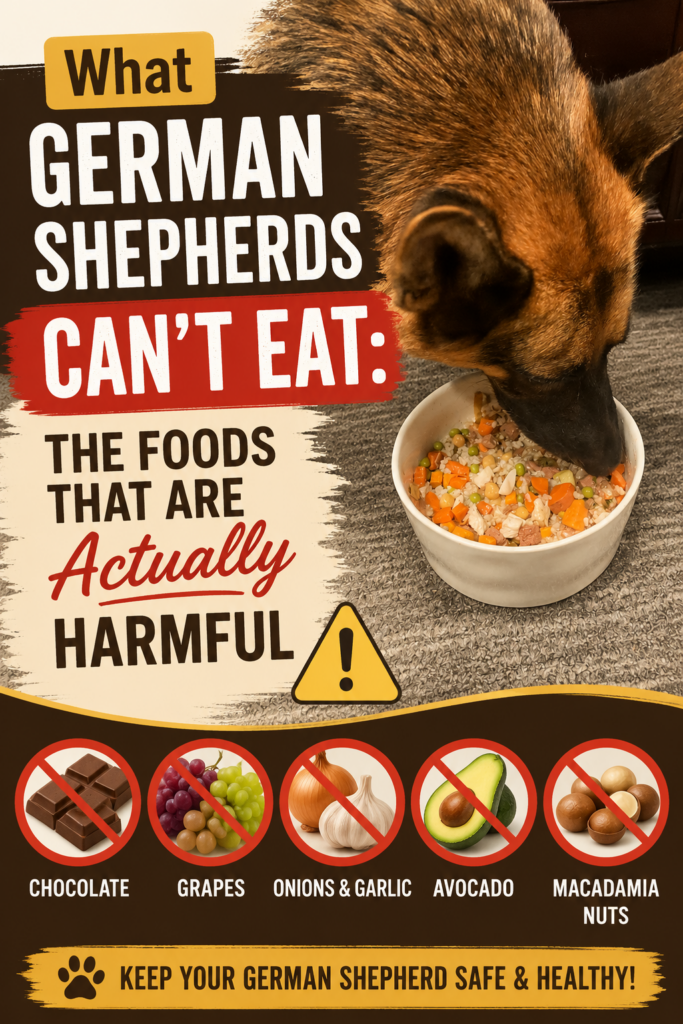
Chocolate, coffee, and caffeine. The theobromine and caffeine are the problem. The darker and more bitter the chocolate, the more dangerous — baking chocolate and dark chocolate are far worse than milk. White chocolate is largely negligible on this front, but why risk it. This is the one Zeus taught me about personally.
Onions, garlic, chives, and leeks (the allium family). These damage red blood cells and can lead to anemia. Garlic is roughly five times more potent than onion, and it’s toxic raw, cooked, or powdered — so that garlic-and-onion seasoned leftover is not a treat. This is why I never share table food that’s been cooked “for people.”
The High-Risk List: Serious Trouble
Not always a slow-motion catastrophe like the severe list, but still a call-your-vet situation.
Alcohol — in any form, including foods soaked in it.
Raw yeast bread dough. This one surprises people. Raw dough expands in the warm stomach and ferments into alcohol — a double hit. Rising dough on the counter is a genuine hazard.
Macadamia nuts. Keep them well away.
Moldy food and compost. That fuzzy leftover or the compost heap can cause tremors. I fenced off my compost after one scary afternoon.
Cooked bones. They splinter and can cause obstructions or perforations. Zeus gets none, ever.
Salt and very salty snacks, and fatty or fried foods. This last one matters extra for our breed — German Shepherds are prone to pancreatic issues, and a greasy binge can trigger pancreatitis. That “harmless” plate of bacon is not harmless for a GSD.
The Moderate and Situational List
These depend on the part, the ripeness, or your individual dog — but I still keep them off the menu.
- Avocado — contains persin and it’s very high in fat.
- Cherry, peach, and apricot pits, plus apple seeds — these contain cyanide compounds. The fruit flesh of an apple is fine; the core and seeds are not.
- Green or unripe tomatoes and green or sprouted potatoes — the solanine is the issue.
- Rhubarb leaves and nutmeg — both off-limits.
- Corn ON the cob — the cob is a classic obstruction risk. Kernels cut off the cob are fine; the cob itself is an ER visit waiting to happen.
- Milk and dairy — a lot of dogs are lactose intolerant, so it’s more of a “sensitive stomach” problem than a poison, but for a gassy senior it’s not worth it.
What This Breed Struggles With Specifically
Here’s where German Shepherds differ from the average dog, and where I’ve learned the most as Zeus has aged.
Sensitive stomachs are practically a breed trait. The most common food allergens for GSDs are beef, dairy, chicken, and wheat. But here’s the important part: a real food allergy is diagnosed by a vet-run elimination diet, not a mail-in cheek-swab or hair kit. Those kits have led a lot of owners down the wrong road. And “grain-free” is not automatically hypoallergenic — allergies are usually to proteins, not grains, so swapping foods on your own can miss the actual culprit.
EPI — exocrine pancreatic insufficiency. This is almost a signature GSD condition, and it’s the one I want every shepherd owner to recognize. The signs: greasy, pale stools, a ravenous appetite, and weight loss despite eating plenty. If that’s your dog, see your vet and ask about the cTLI blood test. It’s manageable once it’s diagnosed, but it needs a diagnosis.
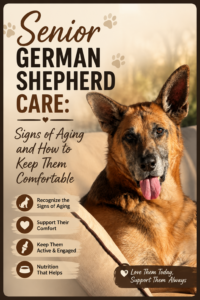
Bloat and GDV. Big deep-chested breeds like ours carry real risk here. What’s worked for us: feeding two to three smaller meals a day instead of one big one, slowing down fast eaters, and avoiding hard exercise right around mealtimes. A slow-feeder bowl genuinely helped Zeus stop inhaling dinner — it’s one of the cheapest pieces of insurance I’ve bought. For more on keeping an aging shepherd comfortable, I go deeper in my Senior GSD Care guide.
Give This Instead: Foods I Feel Good About
I don’t want you to feel like you can never share. Zeus and I have a solid list of plain, in-moderation treats that make him think he’s getting away with something:
- Carrots (great crunchy, low-cal chew)
- Blueberries
- Plain cooked chicken (no seasoning)
- Plain pumpkin puree — not pie filling
- Apple slices, no seeds or core
- Green beans
- Plain, unsweetened yogurt
- Xylitol-free peanut butter (check that label every single time)
For training I stick to simple, single-ingredient options — a good bag of healthy training treats beats table scraps every time, and it keeps portions honest for a senior who’s watching his waistline.
The Habit That Actually Keeps Him Safe
Honestly, the biggest thing isn’t memorizing a list — it’s the environment. I keep counters clear, the trash behind a latched door, purses off the floor (gum and mints live in purses), and I treat “no safe amount” foods like loaded objects. When something does get eaten, I don’t play the wait-and-see game with the severe list. I call the ASPCA at (888) 426-4435 or the Pet Poison Helpline at (855) 764-7661, and I let a professional tell me whether it’s nothing or an emergency.
Zeus has given me eleven good years, and I plan to stack up more by being a little paranoid about his food. If you want to know how nutrition ties into the bigger picture, I wrote about it in German Shepherd Lifespan. Keep the numbers on your fridge, keep the bad stuff out of reach, and share the carrots freely. Your shepherd — like mine — will love you for both.
Sources
- ASPCA: people foods to avoid feeding your pets
- American Kennel Club: human foods dogs can and can’t eat
- VCA Animal Hospitals: xylitol toxicity in dogs
The first time Zeus counter-surfed a chocolate bar, I learned fast which foods are actually an emergency and which just make for a rough night. This is my hard-won, plain-English list of what German Shepherds can’t eat — written by an owner, not a vet. It’s informational only, so when in doubt, call a professional. Program these into your phone right now: ASPCA Animal Poison Control (888) 426-4435 and the Pet Poison Helpline (855) 764-7661. For the severe stuff below, there is no safe amount — call, don’t wait for symptoms. This post has a couple of light affiliate links; if you buy through one I may earn a small commission at no cost to you.