
If you love a German Shepherd, there’s one question that sits quietly in the back of your mind from the day you bring them home: how long do I get with this dog? I asked it about Zeus, and I’ve asked it again every year his muzzle has gone a little greyer. So let me give you the honest answer on German Shepherd lifespan — the real numbers, where they come from, and the things that actually seem to buy a senior shepherd more good years.
How long do German Shepherds live?
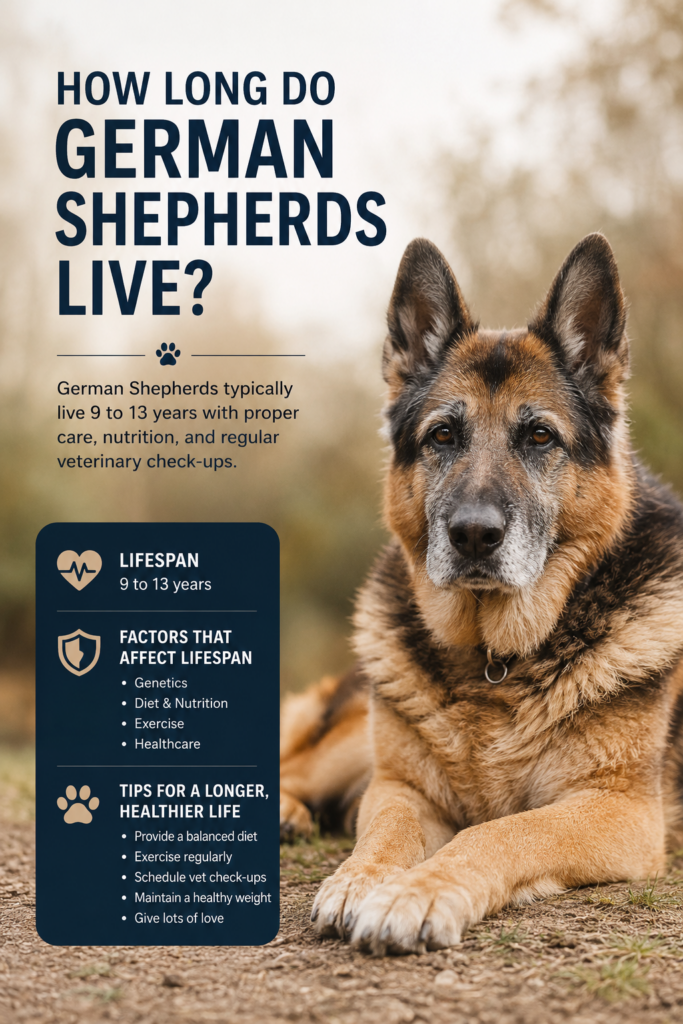
Most German Shepherds live about 9 to 13 years. If you want a single number to hang onto, the large veterinary studies put the average closer to 10 to 11 years.
That range exists for a reason — sources genuinely disagree. One of the biggest studies of the breed (a UK veterinary database covering tens of thousands of German Shepherds) found a median lifespan of around 10.3 years. The American Kennel Club lists the breed a bit lower, at 7 to 10 years. Plenty of owners will tell you their dog made it to 13 or 14.
So the truthful version is: plan for roughly a decade, hope for more, and know that a lot of what happens in those later years is at least partly in your hands (more on that below).
Do female German Shepherds live longer than males?
They tend to, yes — by a little. That same large study found females lived about 11.1 years on average and males about 9.7 years, a difference of roughly a year and a half.
It’s an average, not a promise. I’ve known long-lived males and females who left too soon. But if you’ve noticed the “female German Shepherds live longer” idea floating around, there’s real data behind it.
When is a German Shepherd considered a “senior”?
Earlier than most people expect. Big dogs age faster than little ones, and German Shepherds are generally considered senior around 7 to 8 years old.
That surprised me with Zeus. At seven he still felt like a young dog on a good morning — but that’s exactly the age when it’s worth shifting how you care for them: more frequent vet checks, an eye on the joints, and a diet built for the years ahead rather than the puppy energy behind. Related: Senior German Shepherd Care — signs of aging and how to keep them comfortable.
What do German Shepherds usually pass from?
I’ll keep this gentle, because it’s a hard part to read. In that large veterinary study, the leading reasons German Shepherds were lost clustered around mobility and the musculoskeletal system — arthritis, hip and spinal problems, the slow loss of the back end that the breed is sadly prone to — followed by cancer.
Why does that matter for a lifespan article? Because it tells you where to put your energy. For this breed, protecting the joints and staying on top of mobility isn’t just about comfort — it’s one of the biggest levers you have on how long your dog stays happy, active, and here.
How to give your German Shepherd more good years
None of this is a magic trick, and none of it is a cure for anything. But these are the everyday things that genuinely stack the odds — and they’re mostly free or cheap.
Keep them lean. This is the big one. If you do only one thing on this list, keep your shepherd at a healthy weight. Extra pounds pile stress onto exactly the joints this breed already struggles with, and vets will tell you weight control often does more for an aging dog’s comfort than any supplement. You should be able to feel Zeus’s ribs without pressing. A measuring cup and honest treat math go a long way.
Protect the joints early — don’t wait for a limp. Low-impact exercise (walks, swimming) keeps muscle on the frame without hammering the joints, and a supportive orthopedic / memory-foam dog bed takes pressure off aging hips overnight. Once stairs and the car get harder, a dog ramp saves them the jarring jump. Related: How Much Exercise Does a German Shepherd Need — puppy to senior.
Ask your vet about joint support — with clear eyes. Supplements like omega-3 fish oil and glucosamine/chondroitin may help manage the aches of an older dog, and omega-3s have the best evidence behind them. But be honest with yourself about what they are: support, not a cure, and they’re not regulated as tightly as medicine. Run any supplement past your vet before you start, and look for a trustworthy brand.
Feed for the long game. A quality, complete diet — and a senior-appropriate food as they age — supports muscle, coat, and weight better than a bargain bag ever will. It’s also worth knowing which everyday foods are genuinely dangerous to a dog, because avoiding those matters as much as what you add. Related: What German Shepherds Can’t Eat — the foods that are actually harmful.
Don’t skip the senior vet visits. Once your shepherd is a senior, most vets recommend a check-up twice a year rather than once. Things move faster at this stage, and catching a problem early — a lump, a dental issue, stiffness that’s really arthritis — is how you turn a crisis into a manageable thing.
Keep the mind working. A German Shepherd’s brain ages too, and staying mentally engaged (training, sniff games, puzzle feeders) helps them stay sharp and happy well into the grey-muzzle years.
The years are the whole point
Here’s what living with a senior shepherd has taught me: the number was never really the answer to the question. What matters isn’t squeezing out one more year on a chart — it’s that the years you get are good ones. Lean, comfortable, engaged, loved.
Zeus is deep into his senior chapter now, and honestly it’s my favorite one. He’s slower, greyer, and somehow more himself than ever. Do the boring, consistent things — the weight, the joints, the vet visits, the good food — and you give your dog the best shot at more mornings like the ones I get with him.
And when something feels off, don’t take my word for any of it: call your vet. I’m just the guy down the road who loves this breed and has been through it.
Have a senior German Shepherd of your own? I’d love to hear about them. And if you’re just starting to notice the grey coming in, read the senior care guide next — it walks through what to expect and how to make these years comfortable.
Sources
- RVC VetCompass: demographics and disorders of German Shepherd Dogs
- American Kennel Club: German Shepherd Dog breed information
- PetMD: When is a dog considered senior?
Written from real life with my senior German Shepherd, Zeus. I’m an owner sharing experience, not a vet — anything health-related here is a “talk to your vet,” not medical advice. This post also contains affiliate links; if you buy through one, I may earn a small commission at no extra cost to you.