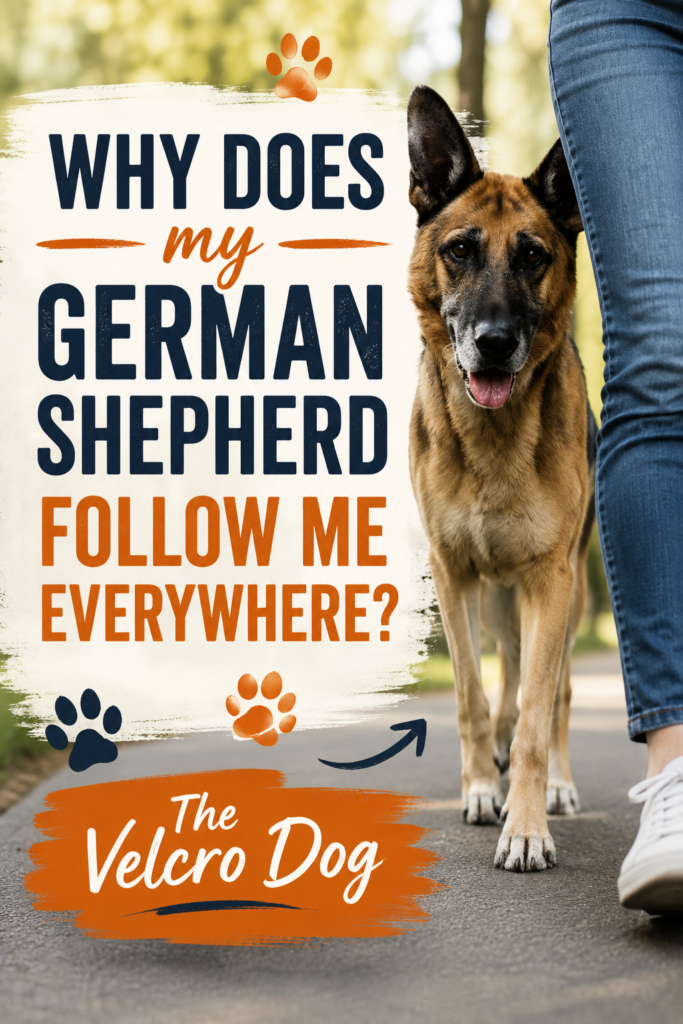
I can’t make a cup of coffee alone. The second I stand up, I hear the tags jingle, then the soft thud of Zeus settling onto the kitchen floor behind me — close enough that if I step back without looking, I’m tripping over ninety pounds of devoted shepherd. So if you’ve ever wondered why does my German Shepherd follow me everywhere, know that I’ve asked myself the same thing while stepping over my own dog for the tenth time in an hour. Below is what I’ve learned about the “velcro dog,” including one senior-specific reason I want every older-GSD owner to know.
Zeus is eleven now. He has followed me from room to room since the day I brought him home as a fuzzy, oversized puppy, and honestly, it’s one of my favorite things about sharing a life with this breed.
Are German Shepherds Affectionate? Why the “Velcro Dog” Is Real
Yes — deeply so. German Shepherds earn the “velcro dog” nickname because staying near their person is quite literally bred into them.
It goes back to what they were made for. Shepherds were developed as close-working herding dogs and as companion-guardians, jobs that required them to stay glued to their handler and read every small cue. That instinct didn’t disappear when they moved from pastures to living rooms.
Puppies imprint early. A young GSD bonds hard to the people who raise it, and the breed is famous for forming intense, loyal, one-family attachments. Zeus decided I was his person before he could climb the porch steps.
And we accidentally teach it, too. Every time your dog follows you and gets a pat, a treat, or a “good boy,” you’ve quietly reinforced the shadowing. I did this for years without realizing it — Zeus follows me to the pantry because, statistically speaking, good things happen at the pantry.
The important takeaway: following you around is normal, and usually a sign of a healthy, secure bond. On its own, it isn’t a problem to fix. If you’re curious how much of this is puppy energy versus lifelong temperament, I dug into that in When Do German Shepherds Calm Down.
Do German Shepherds Show Affection? Here’s How to Read It
People sometimes expect a big, serious-looking breed to be aloof. Zeus is the opposite, and once you learn the signals, you’ll see the love everywhere.
Leaning is a hug. When Zeus presses his full weight against my leg, he’s not being pushy — he’s connecting. It’s classic shepherd affection.
Soft eye contact means trust. That gentle, relaxed gaze actually releases oxytocin — the bonding hormone — in both dog and human. When Zeus and I hold a soft look across the room, we’re chemically reinforcing our bond, not just being sappy.
The other love languages: following you, bringing you a toy (a gift!), the full whole-body wiggle when you walk in the door, and licking. Cuddliness is individual — some GSDs sprawl across your lap, others show love from a respectful few feet away, and both are normal.
One tip that took me too long to learn: most dogs prefer being petted on the chest, shoulders, or the base of the neck rather than on top of the head. Zeus tolerates head pats from me, but he melts for a good chest scratch. If you want more breed personality trivia like this, I collected a bunch in 25 Fun Facts About German Shepherds.
Velcro Dog vs. Separation Anxiety: Know the Difference
Here’s the distinction that matters most. A velcro dog prefers your company but can cope when you leave. A dog with separation anxiety panics when left alone. Those are two very different things, and it’s easy to confuse them.
Separation anxiety only shows up when your dog is actually alone. The signs include:
- Urinating or defecating indoors (in an otherwise house-trained dog)
- Persistent barking or howling
- Destructive chewing or digging, especially at doors and windows
- Escape attempts
- Fixed, repetitive pacing
- Drooling, panting, or trembling
- Frantic, over-the-top greetings when you return
Common triggers are big life changes: a new owner, a move, losing a household member, or a schedule change — the classic one being a return to the office after a long stretch of working from home. Zeus and I renegotiated our whole routine when my work-from-home days ended, and I could tell the quiet house rattled him at first.
If several of those alone-time signs sound familiar, this is worth taking seriously — for anxiety, please loop in your vet and consider a certified behaviorist rather than trying to tough it out.
How I Help Zeus Feel Okay About Alone-Time
When Zeus went through his wobbly patch, a few things genuinely helped. None of this is a cure — no product cures anxiety — but together they build confidence.
Make alone-time predictable and positive. I started handing Zeus a frozen stuffable treat toy right as I left. Licking and working at it is soothing, and it turns my departure into the moment the good stuff appears.
Desensitize gradually. I practiced very short departures — literally stepping outside for a minute — and stretched them out slowly over weeks. Rushing this backfires; patience is the whole game.
Keep hellos and goodbyes boring. As hard as it is to ignore that whole-body wiggle, calm, low-key departures and arrivals teach your dog that comings and goings are no big deal.
Wear them out — body and brain. Plenty of daily exercise plus mental enrichment (sniff walks, training games, puzzle feeders) leaves less fuel for anxiety. A tired shepherd is a calmer shepherd.
Give them a cozy home base. I put a dog bed for your work area a few feet from my desk. Zeus learned he doesn’t have to be touching me to feel safe — near is enough.
And the rule I’ll repeat forever: never punish anxious behavior. Scolding a frightened dog only deepens the fear and makes everything worse. For severe cases, a vet can discuss medical support, and a certified behaviorist can build a real desensitization plan with you.
A Senior GSD Caveat I Wish More People Knew
This is the part I most want to say, owner to owner. If your older German Shepherd suddenly starts following you more — shadowing you into rooms he used to nap through, pacing, or seeming disoriented — don’t just chalk it up to extra love.
A sudden increase in clinginess in a senior dog can signal a health change. Fading vision or hearing can make a dog stick closer for reassurance because you’re their anchor. And new clinginess and anxiety are among the recognized signs of canine cognitive dysfunction — dog dementia.
I bring this up because I watch Zeus for it now. A senior GSD who starts shadowing out of nowhere, gets confused in familiar spaces, or paces deserves a vet visit — not to alarm you, but because catching these things early gives you real options. I put together everything I track for my aging boy in Senior GSD Care.
The Bottom Line on Your Velcro Shepherd
Most of the time, that furry shadow at your heels is exactly what it looks like: a German Shepherd doing the thing it was born to do — loving its person completely. It’s normal, it’s healthy, and it’s one of the great gifts of this breed.
Right now, Zeus is stretched out beside my chair, one paw resting on my foot so he’ll know the instant I move. Eleven years in, I’ve stopped stepping over him with frustration. I just slow down, scratch his chest, and feel lucky to be so thoroughly, relentlessly followed.
Sources
- American Kennel Club: why does my dog follow me everywhere?
- ASPCA: separation anxiety
- VCA Animal Hospitals: cognitive dysfunction in senior pets
This post contains a few affiliate links, and I may earn a small commission if you buy through them — at no extra cost to you.